 EN
EN


Storing mason jars in bulk requires careful planning and execution to prevent chips, cracks, and breakage that can compromise both product integrity and profitability. Whether you operate a commercial kitchen, retail business, or manufacturing facility, improper storage of mason jars can lead to significant financial losses and operational disruptions. Understanding the proper techniques for bulk storage ensures your inventory remains intact, ready for use, and maintains its protective qualities for the products they will eventually contain.
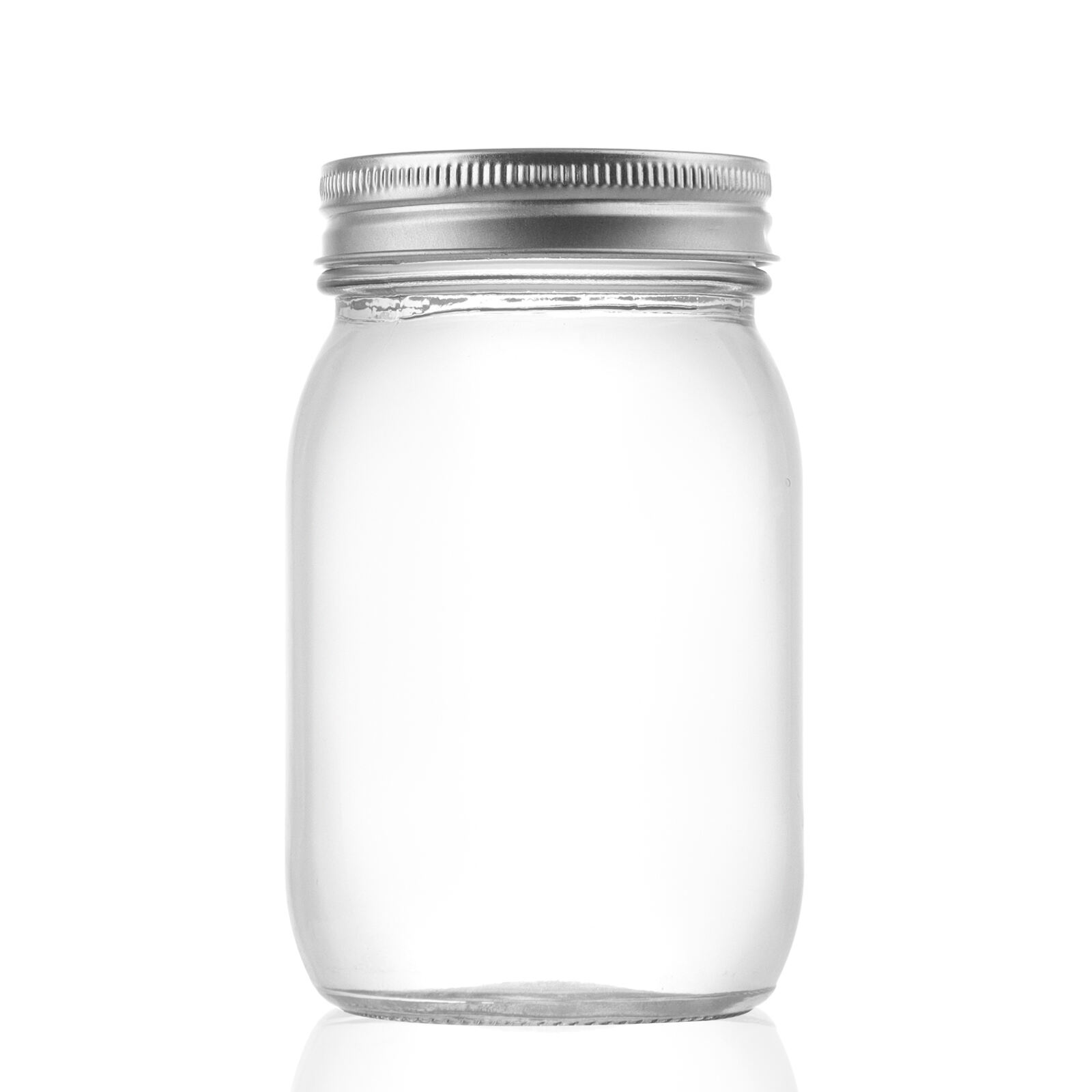
The challenge of storing mason jars without damage becomes exponentially more complex when dealing with large quantities. Temperature fluctuations, improper stacking methods, inadequate cushioning, and environmental factors all contribute to potential damage. This comprehensive guide walks through proven storage methodologies that protect your mason jars investment while maximizing warehouse efficiency and maintaining quality standards throughout the supply chain.
Understanding the Vulnerabilities of Mason Jars During Bulk Storage
Material Characteristics That Affect Storage Requirements
Mason jars are manufactured from soda-lime glass, which possesses specific structural properties that dictate storage considerations. This glass composition provides excellent clarity and chemical resistance but exhibits brittleness under certain conditions. The rim of mason jars represents the most vulnerable point, where glass thickness decreases and stress concentrations occur. When storing mason jars in bulk, recognizing these material limitations prevents storage configurations that place undue pressure on weak points.
The thermal expansion coefficient of glass means mason jars respond to temperature changes by expanding or contracting. Rapid temperature shifts create internal stress within the glass matrix, potentially leading to microfractures that compromise structural integrity. Storage environments for mason jars must maintain stable temperature ranges, ideally between fifteen and twenty-five degrees Celsius, to minimize thermal stress. Humidity control also matters, as condensation can create slippery surfaces that increase handling risks during storage operations.
Manufacturing tolerances in mason jars mean that even products from the same batch may exhibit slight dimensional variations. These variations become significant when stacking hundreds or thousands of units, as minor differences compound and create instability. Quality mason jars maintain tighter tolerances, but storage systems must still accommodate natural variation through flexible cushioning and support structures that distribute weight evenly across contact points.
Common Damage Patterns in Bulk Storage Scenarios
Rim chipping represents the most frequent damage type encountered in bulk mason jar storage, occurring when jars contact each other or hard surfaces during stacking, transport, or retrieval. Even minor rim chips compromise the sealing capability of mason jars, rendering them unsuitable for food preservation or commercial packaging applications. Proper storage techniques eliminate direct jar-to-jar contact and provide cushioned barriers that absorb impact forces during routine warehouse activities.
Stress cracks develop when mason jars experience point loading or uneven weight distribution during stacking. These cracks often originate at the base or shoulder of the jar, where geometric transitions create stress concentration zones. Invisible to the naked eye initially, stress cracks propagate over time and eventually cause catastrophic failure. Storage systems that distribute weight uniformly across the entire base of mason jars prevent point loading and extend the lifespan of stored inventory.
Thermal shock damage occurs when mason jars stored in cold environments are suddenly exposed to warm conditions, or vice versa. The resulting differential expansion rates between the interior and exterior glass surfaces generate tensile stress that exceeds the material's strength. Warehouses storing mason jars must implement gradual temperature transition protocols when moving inventory between different climate zones, allowing glass to equilibrate slowly and avoid shock-induced failure.
Optimal Storage Configuration Methods for Mason Jars
Shelving Systems and Weight Distribution Principles
Industrial shelving for mason jars should feature smooth, flat surfaces without protrusions that could contact jar bases unevenly. Powder-coated steel shelving provides durability while the coating prevents corrosion that could create rough spots. Shelf depth must accommodate full case dimensions plus clearance for safe placement and retrieval. For standard cases of mason jars, shelves measuring forty to fifty centimeters deep provide adequate support while maintaining accessibility from the front.
Weight capacity calculations for shelving storing mason jars must account for both static load and dynamic forces during loading operations. A shelf holding twenty cases of mason jars, each weighing fifteen kilograms, experiences three hundred kilograms of static load. Dynamic loading during placement can momentarily double this force, requiring shelving rated for at least six hundred kilograms per level. Conservative capacity ratings prevent shelf deflection that could destabilize stacked cases and lead to cascading failures.
Vertical spacing between shelves should provide adequate clearance above the tallest mason jars plus allowance for hands during retrieval. Insufficient clearance forces workers to tilt cases during placement, increasing drop risks and contact damage. Standard mason jars require minimum clearances of thirty-five to forty centimeters between shelf levels, while larger specialty jars may need fifty centimeters or more. Adjustable shelving systems offer flexibility to optimize spacing as inventory mixes change over time.
Palletization Strategies for Ground Storage
When storing mason jars on pallets, the pallet condition directly impacts jar safety. Pallets with protruding nails, broken boards, or rough surfaces can puncture case bottoms and allow jars to contact hard surfaces. Food-grade plastic pallets eliminate splinter risks and provide smooth, consistent support surfaces. Pallet dimensions should match case dimensions to prevent overhang that creates instability and increases damage risk during forklift operations.
Stacking patterns for cases of mason jars on pallets must maintain vertical load paths that transfer weight directly downward through structural elements. Column stacking, where cases align vertically, provides maximum stability but limits interlocking. Brick patterns, alternating case orientations between layers, increase interlock but create shear forces that can shift during transport. For mason jars, modified column stacking with minimal offset provides the best balance between stability and mechanical security.
Maximum stack heights for palletized mason jars depend on case strength, jar size, and storage duration. Corrugated cases compress under sustained loads, and this compression accelerates in humid conditions. As a general rule, stacking mason jars more than five to six cases high risks base layer compression that transfers excessive pressure to bottom layer jars. Lighter weight jars tolerate taller stacks, while heavier specialty mason jars require more conservative height limits to prevent bottom case failure.
Protective Materials and Cushioning Techniques
Interlayer Separation Methods
Corrugated cardboard sheets placed between mason jar layers within cases provide critical cushioning that absorbs vertical forces and prevents direct glass-to-glass contact. These dividers should match the internal case dimensions precisely to avoid shifting that could allow jars to migrate and contact each other. Die-cut dividers with individual cells for each jar offer superior protection compared to flat sheets, as they restrict lateral movement while maintaining vertical separation.
Foam inserts molded to jar contours represent premium protection for high-value or delicate mason jars during bulk storage. Closed-cell polyethylene foam resists compression better than open-cell alternatives and does not absorb moisture that could promote mold growth. Foam thickness of six to ten millimeters provides adequate cushioning for standard mason jars, while specialty applications may warrant thicker material. The investment in foam protection pays dividends through reduced breakage rates and extended usable storage periods.
Bubble wrap or air-cushion films work effectively for wrapping individual mason jars or small groups when storing outside original packaging. These materials conform to jar contours and provide cushioning in multiple directions. However, plastic films can trap moisture if used in humid environments, potentially leading to condensation issues. When using bubble wrap for mason jars, ensure storage areas maintain low relative humidity and provide adequate ventilation to prevent moisture accumulation between layers.
Edge and Corner Protection Applications
The edges and corners of palletized mason jar cases experience the highest impact risks during warehouse operations. Edge protectors fashioned from corrugated cardboard, foam, or plastic guard these vulnerable zones against forklift contact and stacking misalignment. L-shaped cardboard corner protectors, when applied to all four vertical edges of a palletized stack, create a protective barrier that absorbs impact forces before they reach the cases and jars within.
Top caps for palletized loads of mason jars prevent crushing damage to the uppermost case during stacking or when placing items on top during temporary storage rearrangements. These caps, typically constructed from heavy-duty corrugated board or plastic, distribute any downward forces across the entire top surface rather than concentrating pressure on small areas. For long-term storage of mason jars, rigid plastic caps that resist moisture and compression provide superior protection compared to cardboard alternatives.
Stretch film applied to palletized mason jar loads stabilizes the stack and prevents case shifting during movement. However, excessive stretch film tension can compress cases and transfer that pressure to the jars inside. Proper stretch wrapping technique for mason jars involves using containment force rather than high tension, wrapping the load sufficiently to maintain stability without compressing the corrugated cases. Starting the wrap at pallet level and extending upward in overlapping layers creates a stable bundle that moves as a unit.
Environmental Controls and Storage Conditions
Temperature and Humidity Management
Maintaining consistent temperature in facilities storing mason jars prevents thermal stress cycles that weaken glass over time. Warehouses should target temperature ranges between eighteen and twenty-two degrees Celsius, with fluctuations limited to no more than five degrees within a twenty-four hour period. Gradual seasonal temperature changes pose minimal risk, but rapid shifts from heating or cooling system cycling can induce thermal shock in mason jars, particularly when exposed to direct airflow from HVAC vents.
Relative humidity control protects both mason jars and their packaging from moisture damage. Ideal relative humidity for glass storage falls between forty and sixty percent, preventing both excessive dryness that increases static electricity and promotes dust accumulation, and high humidity that degrades corrugated packaging and promotes corrosion of metal lids. Dehumidification systems should cycle gradually to avoid creating moisture gradients that cause condensation on cold glass surfaces when humid air contacts cooler jars.
Cold storage facilities present special challenges for mason jars, as refrigerated temperatures increase thermal shock risks during retrieval. When removing mason jars from cold storage, allow cases to equilibrate gradually in a transition zone maintained at intermediate temperatures for at least two hours before exposing them to ambient warehouse conditions. This staged warming prevents condensation formation and eliminates thermal stress that could crack jars or compromise lid seals.
Light Exposure and UV Protection Considerations
While mason jars themselves do not degrade under light exposure, prolonged ultraviolet radiation can weaken adhesives used in labeling and damage printing on cases. Storage areas for mason jars should minimize direct sunlight exposure, particularly near windows or skylights. UV-filtering window films or strategic warehouse layout that positions mason jar storage away from natural light sources prevents degradation of packaging materials and maintains professional appearance of stored inventory.
Artificial lighting in facilities storing mason jars should utilize LED fixtures that emit minimal heat and UV radiation compared to traditional fluorescent or incandescent options. LED lighting reduces energy costs while protecting both the jars and their packaging from light-induced degradation. Motion-activated lighting in storage aisles provides illumination only when needed, further reducing unnecessary light exposure while improving energy efficiency and reducing operating costs for facilities managing large inventories of mason jars.
Opaque covers or tarps provide additional protection for long-term storage of mason jars in facilities with unavoidable light exposure. These covers should be breathable materials that allow air circulation while blocking light, preventing moisture accumulation beneath the cover that could damage corrugated packaging. For outdoor or semi-outdoor storage situations, weatherproof covers specifically designed for pallet loads protect mason jars from both light exposure and precipitation.
Handling Protocols and Inventory Rotation Systems
Safe Material Handling Equipment Operation
Forklift operation around mason jars demands heightened attention to smooth acceleration and deceleration. Sudden stops or starts transfer inertial forces to palletized loads that can shift cases and impact jars together. Operators should approach mason jar storage locations slowly, make gradual movements, and avoid sudden directional changes that destabilize loads. Forklift speed limits in areas with glass storage should not exceed eight kilometers per hour to maintain adequate control and reaction time.
Fork positioning when lifting palletized mason jars must distribute load weight evenly across both forks. Uneven fork insertion creates tilted loads that concentrate weight on one side, increasing tip-over risks and causing cases to slide. Before lifting, operators should verify that forks extend at least two-thirds of the pallet depth and that the load sits centered on the forks. This proper positioning prevents load shifts that could topple entire pallets of mason jars during transport or placement operations.
Pallet jack usage for moving mason jars over short distances requires attention to floor conditions and transition points. Uneven floors, expansion joints, or debris can jar pallet loads and transmit shock forces to the cases and jars. Operators should inspect travel paths before moving mason jars, clearing any obstacles and choosing routes with smooth, level surfaces. When crossing unavoidable transitions like ramps or floor joints, reduce speed and approach at perpendicular angles to minimize impact forces.
First-In-First-Out Inventory Management
Implementing first-in-first-out rotation for mason jars prevents extended storage durations that increase damage risks over time. Even properly stored glass can develop stress fractures during prolonged storage as cumulative weight and minor environmental fluctuations take their toll. Dating each pallet or case upon receipt and organizing storage to facilitate access to oldest inventory ensures mason jars move through the supply chain within recommended timeframes, typically not exceeding twelve months for standard storage conditions.
Storage layout design for mason jars should incorporate access aisles that allow reaching older inventory without disturbing newer stock. Drive-in racking systems, while space-efficient, complicate rotation by requiring removal of front pallets to access rear inventory. For mason jars, selective pallet racking that provides direct access to each pallet position better facilitates proper rotation and reduces handling that could damage jars during the process of reaching older stock buried behind newer arrivals.
Inventory management systems should track not just quantities of mason jars but also storage locations and received dates to support effective rotation. Barcode or RFID systems enable automated tracking that alerts warehouse personnel when older inventory requires prioritization for shipment. Regular cycle counting of mason jar inventory verifies system accuracy and provides opportunities to inspect stored jars for damage, allowing early detection of storage problems before they affect large portions of inventory.
FAQ
What is the maximum height for stacking cases of mason jars safely?
The safe stacking height for cases of mason jars typically ranges from five to six cases maximum, depending on case construction quality and jar weight. Exceeding this height risks compressing bottom cases and transferring excessive pressure to the jars inside. Heavier specialty mason jars may require lower stack heights of four cases, while lighter standard jars in reinforced cases might tolerate six cases under optimal conditions. Always consider storage duration, as longer storage times warrant more conservative stacking heights to account for case compression over time.
Can mason jars be stored in unheated warehouses during winter?
Mason jars can tolerate cold storage temperatures without direct damage to the glass itself, but extreme cold presents risks during retrieval when jars transition to warmer environments. If storing mason jars in unheated facilities, implement gradual warming protocols that allow jars to equilibrate slowly before exposing them to heated areas. The primary concern involves thermal shock from rapid temperature changes rather than the cold temperature itself. Ensure cases remain dry and protected from precipitation, as frozen moisture can damage corrugated packaging and create hazardous handling conditions.
How often should stored mason jars be inspected for damage?
Conduct visual inspections of stored mason jars at least monthly, examining accessible areas of palletized loads for signs of case damage, shifting, or leaning that could indicate developing problems. More thorough inspections involving partial load disassembly should occur quarterly or whenever inventory moves through rotation. These detailed inspections allow examination of individual cases and sample jars for chips, cracks, or packaging deterioration. Document inspection findings to track trends and identify storage areas or handling practices that correlate with higher damage rates.
What type of flooring works best for facilities storing mason jars?
Smooth, level concrete flooring provides the ideal surface for facilities storing mason jars, offering stability for palletized loads and smooth travel for material handling equipment. The floor should feature proper drainage to prevent water accumulation and incorporate sealed or treated surfaces that minimize dust generation. Epoxy coatings enhance concrete floors by creating seamless, easy-to-clean surfaces that resist cracking and maintain levelness over time. Avoid uneven floors, damaged sections, or floor coatings that become slippery when wet, as these conditions increase risks during mason jar handling and transport operations.