 EN
EN

Choosing the right packaging for liquid pharmaceutical products is one of the most consequential decisions a manufacturer, formulator, or procurement specialist can make. When it comes to medical syrup bottles, the debate between glass and plastic has persisted for decades, and for good reason. Each material brings a distinct set of advantages and limitations that directly affect product safety, shelf life, regulatory compliance, and end-user experience.
This article takes a structured, practical look at both materials in the context of medical syrup bottles, examining their chemical properties, performance under real-world conditions, regulatory standing, and suitability for different pharmaceutical applications. Whether you are sourcing packaging for an oral antibiotic, a pediatric vitamin suspension, or a cough syrup formulation, understanding these trade-offs will help you make a more informed and defensible packaging decision.
Understanding the Core Materials Used in Medical Syrup Bottles
Glass as a Packaging Material
Glass has been used in pharmaceutical packaging for centuries, and its continued relevance in modern medicine is not simply a matter of tradition. The material is composed primarily of silica, with added oxides that determine its chemical resistance and thermal properties. For medical syrup bottles, borosilicate and soda-lime glass are the two most commonly used types, each suited to different formulation requirements.
One of the defining characteristics of glass is its chemical inertness. It does not react with the vast majority of pharmaceutical compounds, which means the active ingredients in a syrup formulation remain stable and uncontaminated throughout the product's shelf life. This inertness is particularly valuable for formulations that are sensitive to oxidation, pH shifts, or chemical migration from packaging materials.
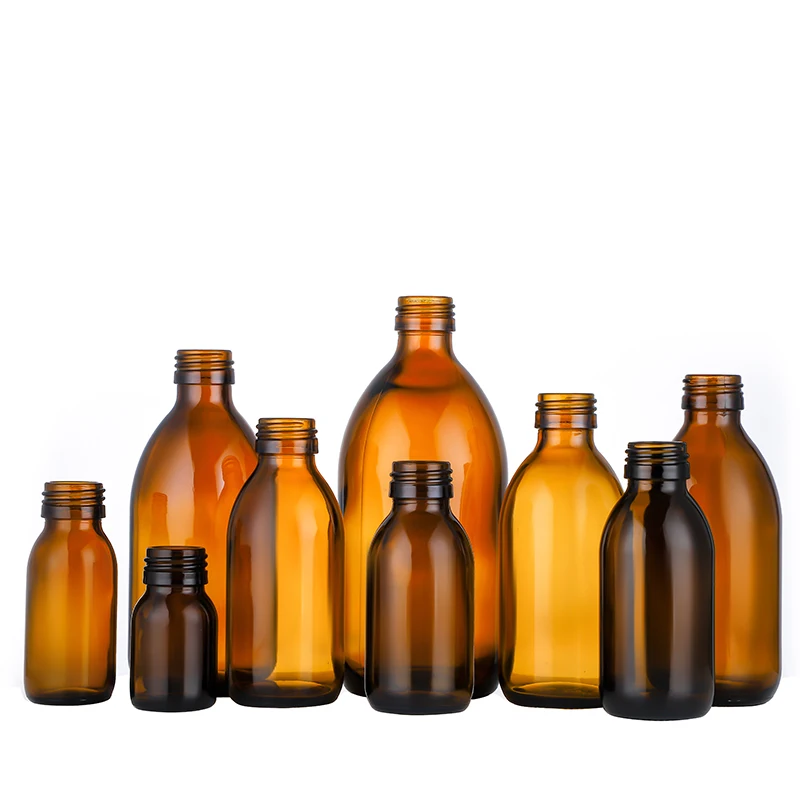
Glass medical syrup bottles also offer excellent barrier properties against moisture, oxygen, and volatile compounds. This makes them a preferred choice for formulations where even trace levels of environmental exposure could degrade efficacy or alter taste and odor. Amber glass, in particular, provides UV protection that shields light-sensitive active ingredients from photodegradation.
Plastic as a Packaging Material
Plastic medical syrup bottles are typically manufactured from materials such as high-density polyethylene (HDPE), polyethylene terephthalate (PET), or polypropylene (PP). Each polymer has its own profile of chemical resistance, flexibility, and compatibility with pharmaceutical formulations. The selection of the right plastic resin is critical and must be validated against the specific syrup formulation being packaged.
Plastic offers significant practical advantages in terms of weight and impact resistance. A plastic medical syrup bottle is far less likely to shatter during transport, handling, or accidental drops, which reduces product loss and safety hazards in clinical and home-use settings. This is a meaningful consideration for pediatric formulations, where bottles are frequently handled by caregivers and children.
Modern pharmaceutical-grade plastics are engineered to minimize leaching and migration, but this remains an area of ongoing scrutiny. Additives such as plasticizers, stabilizers, and colorants used in plastic manufacturing can potentially interact with certain formulations, particularly those with high alcohol content or acidic pH. Compatibility testing is therefore a non-negotiable step when selecting plastic for medical syrup bottles.
Comparative Pros and Cons: Glass Medical Syrup Bottles
Advantages of Glass for Syrup Packaging
The primary advantage of glass medical syrup bottles is their unmatched chemical stability. Because glass does not absorb or leach compounds into the product, it is the material of choice for formulations with complex active ingredient profiles or those requiring long shelf lives. Regulatory bodies in many markets recognize glass as the gold standard for pharmaceutical liquid packaging, which can simplify the approval process for new drug applications.
Glass is also fully recyclable and does not degrade in quality through the recycling process, which aligns with growing sustainability mandates in the pharmaceutical industry. From a perception standpoint, glass medical syrup bottles convey a sense of quality and purity that resonates with both healthcare professionals and end consumers. This can be a meaningful differentiator in competitive pharmaceutical markets.
The rigidity of glass provides excellent dimensional stability, ensuring that closures, tamper-evident seals, and dispensing mechanisms fit precisely and consistently. This is important for maintaining the integrity of child-resistant and tamper-evident packaging systems that are required by regulation in many jurisdictions.
Disadvantages of Glass for Syrup Packaging
The most significant drawback of glass medical syrup bottles is their fragility. Glass can shatter on impact, creating both a product loss event and a potential safety hazard. This fragility increases logistics costs, as glass bottles require more protective secondary packaging and careful handling throughout the supply chain. Breakage rates, even when low, represent a real cost that must be factored into total packaging economics.
Glass is also considerably heavier than plastic, which increases shipping costs and carbon footprint per unit. For large-volume distribution networks or export-oriented pharmaceutical manufacturers, this weight differential can translate into meaningful cost disadvantages over time. The higher unit cost of glass medical syrup bottles compared to equivalent plastic containers is another factor that affects packaging budget decisions, particularly for high-volume, price-sensitive product lines.
Manufacturing glass bottles requires higher energy input than producing plastic containers, and the tooling and production processes are less flexible when it comes to rapid design changes or short production runs. This can be a constraint for pharmaceutical companies that need to respond quickly to market changes or regulatory labeling updates.
Comparative Pros and Cons: Plastic Medical Syrup Bottles
Advantages of Plastic for Syrup Packaging
Plastic medical syrup bottles offer a compelling combination of lightweight construction and impact resistance that makes them highly practical for a wide range of distribution and end-use scenarios. Their resistance to breakage is particularly valued in markets where cold chain logistics, rough handling conditions, or home-use environments are common. For over-the-counter cough syrups and pediatric formulations, plastic is often the default choice for these reasons.
The design flexibility of plastic is another significant advantage. Plastic medical syrup bottles can be molded into a wide variety of shapes, sizes, and configurations with relatively low tooling costs. This makes it easier to create ergonomic, brand-differentiated packaging that improves user experience and shelf appeal. Features such as integrated measuring caps, squeezable walls, and custom grip profiles are more readily achievable in plastic than in glass.
From a cost perspective, plastic medical syrup bottles are generally less expensive to produce and ship than their glass counterparts. For pharmaceutical companies operating in cost-sensitive markets or managing large-scale distribution, this cost advantage can be substantial. The lower weight also reduces shipping costs and the environmental impact associated with transportation.
Disadvantages of Plastic for Syrup Packaging
The primary concern with plastic medical syrup bottles is the potential for chemical interaction between the packaging material and the formulation. Certain active pharmaceutical ingredients, excipients, and solvents can interact with plastic resins, leading to leaching of packaging components into the product or sorption of active ingredients into the bottle wall. Both phenomena can compromise product safety and efficacy, making rigorous compatibility testing essential.
Plastic also has inferior barrier properties compared to glass in many applications. While modern pharmaceutical-grade plastics have improved significantly, they are generally more permeable to oxygen and moisture than glass. For formulations that are sensitive to oxidation or humidity, this can shorten shelf life or require additional protective measures such as desiccants or modified atmosphere packaging.
Environmental concerns around plastic waste are increasingly influencing packaging decisions in the pharmaceutical sector. Single-use plastic medical syrup bottles contribute to plastic waste streams, and while recyclable grades exist, actual recycling rates for pharmaceutical packaging remain low in many regions. This is a growing reputational and regulatory risk for pharmaceutical brands that rely heavily on plastic packaging.
Regulatory and Compliance Considerations for Medical Syrup Bottles
Pharmacopeial Standards and Material Classification
Both glass and plastic medical syrup bottles are subject to pharmacopeial standards that define acceptable material types, testing protocols, and performance criteria. The United States Pharmacopeia (USP), European Pharmacopoeia (Ph. Eur.), and other national standards bodies classify glass into types based on hydrolytic resistance, with Type I borosilicate glass being the most chemically resistant and Type III soda-lime glass being suitable for many oral liquid formulations including syrups.
For plastic medical syrup bottles, pharmacopeial standards require that the resin and any additives be evaluated for extractables and leachables. This testing process is designed to identify any compounds that could migrate from the packaging into the product under normal storage conditions or under stress conditions. Meeting these standards is a prerequisite for regulatory approval in most major pharmaceutical markets.
Regulatory agencies such as the FDA and EMA require that packaging be demonstrated to be suitable for its intended use through a combination of material characterization, compatibility testing, and stability studies. The choice between glass and plastic medical syrup bottles therefore has direct implications for the scope and cost of the regulatory submission package required to bring a product to market.
Child-Resistant and Tamper-Evident Requirements
Both glass and plastic medical syrup bottles can be fitted with child-resistant closures and tamper-evident features, but the implementation differs between the two materials. Glass bottles typically use metal or plastic closures with induction seals or breakable rings, while plastic bottles can incorporate a wider range of integrated closure designs. The choice of closure system must be validated as part of the overall packaging system, not just the bottle itself.
Tamper evidence is a regulatory requirement for many categories of oral pharmaceutical products, and the packaging system must demonstrate that any tampering will be visibly apparent to the end user. Both glass and plastic medical syrup bottles can meet this requirement, but the specific closure and sealing technology used must be selected and validated carefully to ensure consistent performance across the intended distribution and storage conditions.
Selecting the Right Material for Your Application
Formulation-Driven Selection Criteria
The single most important factor in choosing between glass and plastic medical syrup bottles is the chemical nature of the formulation itself. Formulations with high alcohol content, extreme pH values, or active ingredients known to interact with polymers are generally better suited to glass packaging. Conversely, aqueous formulations with well-characterized compatibility profiles may be suitable for plastic, provided that the appropriate resin and testing protocols are applied.
Shelf life requirements also play a decisive role. If a medical syrup formulation requires a shelf life of three years or more, the superior barrier properties and chemical inertness of glass medical syrup bottles may be necessary to maintain product quality throughout the intended storage period. For shorter shelf life products or those with robust stability profiles, plastic may offer an acceptable and more economical alternative.
The intended use environment is another critical consideration. Medical syrup bottles destined for hospital pharmacies, where controlled storage conditions and professional handling are the norm, may be well-suited to glass. Those intended for home use, retail pharmacy shelves, or distribution in markets with challenging logistics infrastructure may benefit from the durability and lighter weight of plastic.
Balancing Cost, Sustainability, and Performance
No packaging decision exists in isolation from commercial and operational realities. The total cost of ownership for medical syrup bottles must account not only for the unit cost of the bottle itself but also for secondary packaging, logistics, breakage rates, regulatory testing costs, and end-of-life disposal or recycling. A thorough cost-benefit analysis that incorporates all of these factors will often reveal a more nuanced picture than a simple unit price comparison.
Sustainability considerations are becoming increasingly important in pharmaceutical packaging procurement. Glass offers the advantage of infinite recyclability without quality degradation, while certain plastic resins are now available in recycled or bio-based grades that reduce the environmental footprint of medical syrup bottles. Both materials are evolving in response to sustainability pressures, and the gap between them in terms of environmental impact is narrowing as the industry invests in more circular packaging solutions.
Ultimately, the best choice between glass and plastic medical syrup bottles is the one that best serves the specific formulation, regulatory pathway, distribution model, and end-user needs of the product in question. There is no universal answer, but a structured evaluation framework that addresses each of these dimensions will lead to a more defensible and commercially sound packaging decision.
FAQ
Are glass medical syrup bottles safer than plastic ones?
Glass medical syrup bottles are chemically inert and do not leach compounds into the formulation, which makes them inherently safer from a chemical interaction standpoint. However, their fragility introduces a physical safety risk if breakage occurs. Plastic medical syrup bottles eliminate the breakage risk but require rigorous compatibility and extractables testing to confirm chemical safety. Neither material is categorically safer; the appropriate choice depends on the formulation and use context.
Can plastic medical syrup bottles meet the same regulatory standards as glass?
Yes, plastic medical syrup bottles can meet pharmacopeial and regulatory standards, provided the correct resin is selected and the required compatibility, extractables, and stability testing is completed. Regulatory agencies evaluate the packaging system as a whole, and plastic containers that pass the required testing are fully acceptable for oral pharmaceutical liquids including syrups. The testing burden for plastic is generally more extensive than for glass, which can affect development timelines and costs.
Which type of medical syrup bottle is better for pediatric formulations?
For pediatric formulations, plastic medical syrup bottles are often preferred due to their impact resistance and lighter weight, which reduce the risk of breakage in home-use settings where children and caregivers are handling the product. Plastic also allows for more ergonomic and user-friendly bottle designs. However, the formulation must still be validated for compatibility with the chosen plastic resin, and child-resistant closure requirements must be met regardless of the bottle material.
How does UV protection differ between glass and plastic medical syrup bottles?
Amber glass medical syrup bottles provide excellent UV protection by absorbing light in the wavelength range most likely to cause photodegradation of active pharmaceutical ingredients. Plastic medical syrup bottles can also be produced in amber or opaque formulations to provide UV protection, but the level of protection depends on the specific colorant and resin used. For highly light-sensitive formulations, amber glass is generally considered the more reliable and well-characterized option, though validated amber plastic alternatives are available and widely used.