 EN
EN

Selecting the right medical syrup bottle is one of those decisions that quietly shapes the quality, safety, and professionalism of your pharmacy operation. Whether you are dispensing cough syrups, pediatric suspensions, or herbal liquid formulations, the container you choose directly affects product integrity, patient compliance, and regulatory standing. A poorly chosen medical syrup bottle can compromise dosage accuracy, accelerate ingredient degradation, and even raise liability concerns — outcomes no pharmacy can afford.
This guide walks pharmacy professionals through the key selection criteria for a medical syrup bottle, covering material types, volume considerations, closure systems, labeling compatibility, and compliance requirements. By the end, you will have a clear framework for evaluating your options and making a confident, informed choice that serves both your patients and your business.
Understanding the Role of a Medical Syrup Bottle in Pharmacy Practice
Why the Container Is Part of the Product
In pharmaceutical practice, packaging is never just a vessel. A medical syrup bottle is an active component of the drug delivery system. It must protect the formulation from light, moisture, oxygen, and microbial contamination throughout the product's shelf life. For liquid oral medications in particular, the interaction between the container and its contents can influence potency, taste, and stability in ways that solid dosage forms rarely experience.
Pharmacists and procurement managers who treat the medical syrup bottle as a secondary concern often discover problems downstream — discoloration, sedimentation, or leaching — that trace back to an incompatible or substandard container. Treating the bottle as an integral part of the formulation from the outset prevents these issues and supports consistent therapeutic outcomes.
This perspective also aligns with regulatory expectations. Most pharmaceutical regulatory frameworks require that packaging materials be evaluated for compatibility with the drug product, meaning the choice of medical syrup bottle carries formal quality assurance implications, not just practical ones.
The Pharmacy's Specific Dispensing Context
A hospital pharmacy, a retail dispensing pharmacy, and a compounding pharmacy each have different needs when it comes to a medical syrup bottle. Retail pharmacies often prioritize consumer-friendly designs with clear graduation markings and child-resistant closures. Hospital pharmacies may require unit-dose or multi-dose configurations that integrate with their dispensing workflows. Compounding pharmacies need bottles that can accommodate custom formulations with varying viscosities and chemical profiles.
Understanding your specific dispensing context before evaluating any medical syrup bottle option is essential. The right bottle for one setting may be entirely wrong for another, even if the liquid being dispensed is chemically similar. Context-driven selection leads to better outcomes across the board.
Material Selection for a Medical Syrup Bottle
Glass Versus Plastic: A Practical Comparison
The most fundamental material decision when choosing a medical syrup bottle is whether to use glass or plastic. Both materials have legitimate roles in pharmaceutical packaging, and the right choice depends on the formulation, the storage environment, and the intended use case.
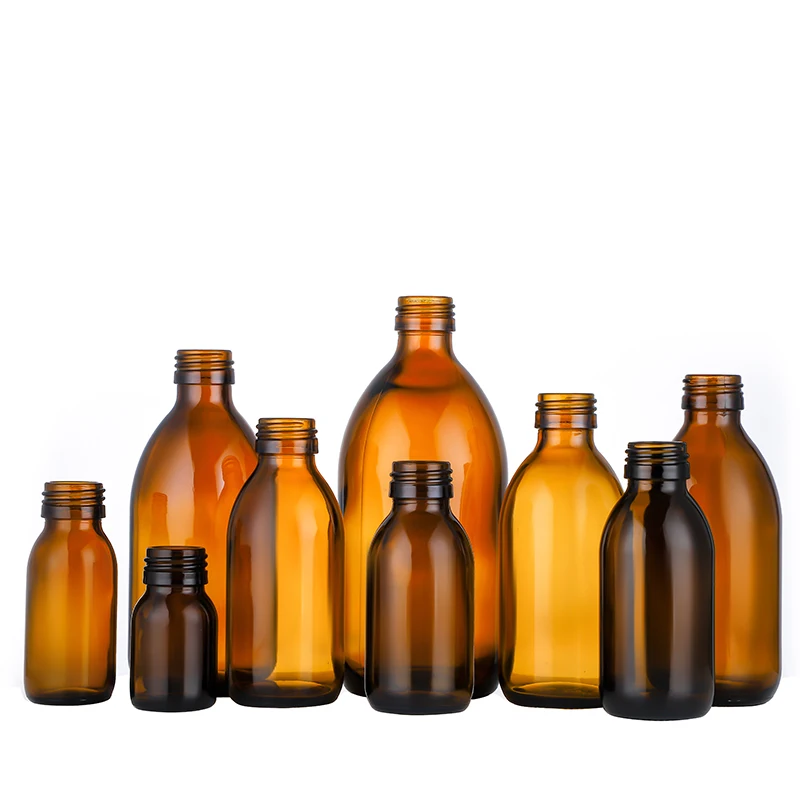
Glass, particularly amber borosilicate glass, remains the gold standard for many liquid pharmaceutical applications. It is chemically inert, impermeable to gases and moisture, and provides excellent UV protection in its amber form. A glass medical syrup bottle is especially well-suited for formulations that are sensitive to light or that contain ingredients known to interact with plastic polymers. It also conveys a perception of quality and safety that resonates with patients and healthcare professionals alike.
Plastic bottles, typically made from high-density polyethylene (HDPE) or polyethylene terephthalate (PET), offer advantages in weight, breakage resistance, and cost. They are widely used for over-the-counter syrups and pediatric formulations where drop resistance is a practical concern. However, not all plastics are suitable for all formulations. Some active pharmaceutical ingredients can migrate into or react with certain plastic materials, making compatibility testing a non-negotiable step when selecting a plastic medical syrup bottle.
Amber Color and Light Protection
Many liquid pharmaceutical formulations are photosensitive, meaning exposure to ultraviolet or visible light can degrade active ingredients and reduce shelf life. Amber coloring in a medical syrup bottle — whether glass or plastic — provides a critical barrier against this degradation. The amber tint filters out the wavelengths most likely to trigger photochemical reactions, preserving the potency and appearance of the syrup inside.
For pharmacies dispensing formulations with known light sensitivity, such as certain antihistamines, iron supplements, or herbal extracts, specifying an amber medical syrup bottle is not optional — it is a quality requirement. Even for formulations without documented photosensitivity, amber packaging is a conservative and professionally sound default that reduces risk without adding significant cost.
When evaluating suppliers, ask for transmittance data for the amber material used. A reputable manufacturer of a medical syrup bottle will be able to provide spectrophotometric data confirming the level of light protection their amber glass or plastic offers across relevant wavelength ranges.
Volume, Dimensions, and Dosage Accuracy
Matching Bottle Volume to Dispensing Needs
A medical syrup bottle comes in a wide range of standard volumes, commonly from 60 ml up to 500 ml or more. Choosing the right volume is not simply a matter of fitting the prescribed quantity — it also affects dosage accuracy, patient usability, and storage efficiency. Overly large bottles for small prescriptions can make accurate measurement difficult and may encourage patients to store partially used containers improperly.
For pediatric formulations, smaller volumes such as 60 ml or 100 ml are typically preferred, as they align with typical course durations and reduce the risk of accidental overconsumption. Adult formulations for chronic conditions may warrant 200 ml or 300 ml bottles that support longer treatment periods without requiring frequent refills. Compounding pharmacies often need a range of sizes to accommodate individualized prescriptions, making flexibility in bottle volume selection a key procurement consideration.
When evaluating a medical syrup bottle for volume, also consider the headspace — the empty space above the liquid when the bottle is filled to the recommended level. Adequate headspace allows for thermal expansion and facilitates mixing of suspensions, while excessive headspace increases the oxygen exposure that can degrade sensitive formulations.
Graduation Markings and Measurement Clarity
Accurate dosing depends not only on the prescriber's instructions but also on the patient's ability to measure correctly at home. A medical syrup bottle with clear, permanent graduation markings supports safe self-administration and reduces the risk of dosing errors. Markings should be molded or embossed into the glass or printed with pharmaceutical-grade inks that resist fading, smearing, and solvent exposure.
For pharmacies that dispense to elderly patients or those with visual impairments, larger and higher-contrast graduation markings on the medical syrup bottle can make a meaningful difference in medication adherence and safety. Some bottle designs also incorporate a wide base and a slightly tapered neck to improve stability during pouring, which is a practical ergonomic consideration worth evaluating.
Closure Systems and Child-Resistant Compliance
Choosing the Right Cap for Your Medical Syrup Bottle
The closure system of a medical syrup bottle is as important as the bottle itself. A poorly fitting or low-quality cap can allow moisture ingress, cause leakage during transport, or fail to provide the child-resistant protection required by law in many jurisdictions. Closures for pharmaceutical liquid bottles typically include continuous thread (CT) caps, child-resistant push-and-turn caps, and tamper-evident bands or seals.
Child-resistant closures are mandatory for most prescription liquid medications in markets such as the United States, the European Union, and many other regulated markets. When sourcing a medical syrup bottle, confirm that the closure system has been tested and certified to meet the relevant child-resistant packaging standard, such as ISO 8317 or the US Consumer Product Safety Commission (CPSC) requirements. Certification documentation should be available from the supplier on request.
Tamper-evident features — such as shrink bands, induction seals, or breakaway rings — add another layer of patient safety and product integrity assurance. For pharmacies that dispense pre-filled bottles or that repackage bulk syrups, tamper-evident closures also provide legal protection by demonstrating that the product has not been opened or adulterated after dispensing.
Liner Materials and Chemical Compatibility
The liner inside a bottle cap is a frequently overlooked component of the medical syrup bottle system. Liners create the seal between the cap and the bottle neck, and they must be chemically compatible with the syrup formulation. Common liner materials include polyethylene foam, pulp-poly combinations, and induction-seal foil liners. Each has different resistance profiles to solvents, acids, alcohols, and essential oils commonly found in syrup formulations.
Incompatible liner materials can leach plasticizers or absorb active ingredients, compromising both the safety and the potency of the dispensed medication. When selecting a medical syrup bottle and closure combination, request liner compatibility data from the supplier and cross-reference it against your formulation's ingredient list. This step is especially important for compounded preparations that may contain unusual solvent systems or high concentrations of flavoring agents.
Labeling, Regulatory Compliance, and Supplier Evaluation
Label Adhesion and Surface Compatibility
A medical syrup bottle must provide a stable, clean surface for pharmaceutical labeling. Labels that peel, bubble, or smear create compliance risks and undermine patient confidence. The bottle surface — whether glass or plastic — should be free of mold release agents, surface treatments, or coatings that interfere with label adhesive performance. For glass bottles, surface treatments such as soda-lime coatings can sometimes reduce label adhesion, so it is worth confirming the surface specification with the manufacturer.
Pharmacies that use automated labeling equipment should also verify that the bottle dimensions and surface geometry are compatible with their labeling machinery. Irregular curves, embossed patterns, or non-standard neck finishes can cause label misalignment or application failures that slow dispensing workflows and create quality control issues.
Regulatory Standards and Documentation
Pharmaceutical packaging is subject to regulatory oversight in virtually every market. A medical syrup bottle used in a licensed pharmacy must meet the applicable pharmacopeial standards — such as those set out in the United States Pharmacopeia (USP), the European Pharmacopoeia (Ph. Eur.), or equivalent national standards. These standards specify requirements for glass type, extractables and leachables, dimensional tolerances, and closure performance.
When evaluating suppliers, request certificates of conformance, material safety data sheets, and test reports that demonstrate compliance with the relevant standards for the medical syrup bottle you are considering. Reputable suppliers will have this documentation readily available and will be transparent about the testing protocols they use. Suppliers who cannot provide documentation should be treated with caution, regardless of price.
For pharmacies operating under Good Manufacturing Practice (GMP) or Good Dispensing Practice (GDP) frameworks, the traceability of packaging components is also a compliance requirement. Ensure that your medical syrup bottle supplier can provide batch-level traceability documentation that supports your internal quality management system.
FAQ
What is the best material for a medical syrup bottle used in a pharmacy?
Amber glass is widely considered the most reliable material for a medical syrup bottle, particularly for light-sensitive or chemically reactive formulations. It is chemically inert, impermeable, and provides strong UV protection. HDPE plastic is a practical alternative for formulations where breakage resistance and weight are priorities, provided compatibility with the specific formulation has been confirmed through testing.
How do I know if a medical syrup bottle meets regulatory requirements?
Ask the supplier for documentation confirming compliance with the relevant pharmacopeial standards, such as USP or Ph. Eur., as well as child-resistant closure certifications if applicable. A compliant medical syrup bottle supplier will provide certificates of conformance, extractables and leachables data, and dimensional test reports. Always verify that the documentation covers the specific bottle and closure combination you intend to use.
What volume of medical syrup bottle should a pharmacy stock?
The ideal volume depends on your dispensing patterns and patient population. Most pharmacies benefit from stocking a range of sizes — commonly 60 ml, 100 ml, 150 ml, 200 ml, and 300 ml — to accommodate different prescription quantities and formulation types. Pediatric dispensing typically favors smaller volumes, while chronic condition management may require larger bottles to support extended treatment courses.
Can the same medical syrup bottle be used for different formulations?
Not without careful evaluation. Each formulation has a unique chemical profile that may interact differently with the bottle material, liner, and closure. A medical syrup bottle that is compatible with one syrup may not be suitable for another with a different solvent system, pH, or active ingredient. Always conduct or request compatibility testing before using the same bottle specification across multiple formulations, especially in a compounding pharmacy context.