 EN
EN

In the pharmaceutical and healthcare supply chain, packaging is never a secondary concern. medical syrup bottles are subject to a rigorous framework of safety and compliance standards that govern everything from material composition to labeling requirements. These standards exist to protect patients, preserve product integrity, and ensure that every bottle reaching a pharmacy shelf or hospital dispensary meets the same baseline of quality and safety. Understanding these requirements is essential for manufacturers, procurement teams, and healthcare distributors alike.
The regulatory landscape surrounding medical syrup bottles is both broad and detailed. It spans international pharmacopeial standards, regional regulatory authority requirements, and industry-specific material safety guidelines. For businesses operating in this space, compliance is not optional — it is the foundation of market access, product liability management, and patient trust. This article breaks down the key safety and compliance dimensions that define what makes a medical syrup bottle fit for purpose in today's pharmaceutical environment.
Material Safety Standards for Medical Syrup Bottles
Why Material Selection Is a Regulatory Matter
The materials used in medical syrup bottles are not chosen purely for aesthetics or cost efficiency. Regulatory bodies require that all contact materials — meaning any material that directly touches the liquid medicine — must be chemically inert, non-toxic, and free from substances that could leach into the product. This is particularly critical for oral liquid medications, where the patient directly ingests the contents.
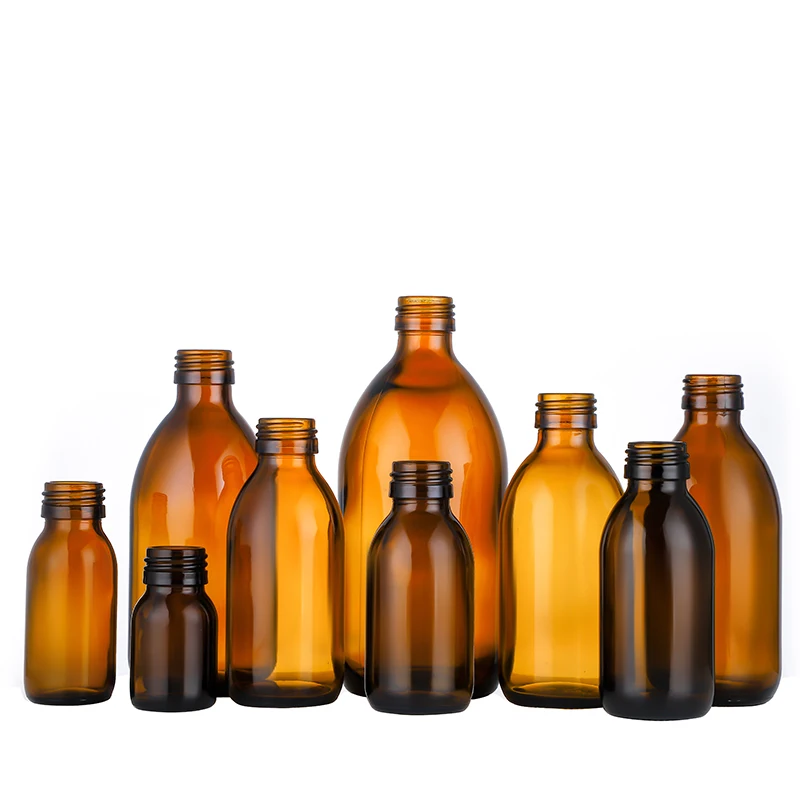
Glass remains the gold standard for medical syrup bottles in many pharmaceutical applications. Amber borosilicate or soda-lime glass provides excellent chemical resistance, prevents UV light degradation, and does not interact with active pharmaceutical ingredients. Regulatory standards such as those outlined in the United States Pharmacopeia (USP) and the European Pharmacopoeia (Ph. Eur.) classify pharmaceutical glass into types based on hydrolytic resistance, with Type I and Type III glass being most commonly specified for oral liquid packaging.
Plastic alternatives, including high-density polyethylene (HDPE) and polypropylene (PP), are also used for medical syrup bottles, but they must pass extractables and leachables testing. This testing identifies any chemical compounds that may migrate from the container into the drug product over time, especially under stress conditions such as elevated temperature or prolonged storage. Failure to meet these thresholds can result in product recalls or regulatory rejection.
Compliance with Pharmacopeial Material Specifications
Both the USP and Ph. Eur. publish detailed monographs on pharmaceutical packaging materials. For medical syrup bottles, these monographs specify acceptable glass types, permissible plastic resins, and testing protocols for chemical resistance. Manufacturers must demonstrate compliance through documented testing, often conducted by accredited third-party laboratories.
Amber-colored glass is specifically required or recommended for light-sensitive formulations. The amber tint filters out wavelengths of light that can degrade certain active ingredients, making it a functional safety feature rather than a cosmetic choice. Medical syrup bottles made from amber glass must meet transmittance specifications defined in pharmacopeial standards to ensure adequate light protection across the relevant wavelength range.
For plastic medical syrup bottles, compliance also extends to the additives used during manufacturing — including plasticizers, stabilizers, and colorants. Each additive must be approved for food or pharmaceutical contact use under applicable regulations, such as FDA 21 CFR or EU Regulation 10/2011 for plastic materials in contact with food and pharmaceutical products.
Closure and Seal Integrity Requirements
Child-Resistant Closures and Tamper Evidence
One of the most visible safety requirements for medical syrup bottles is the use of child-resistant closures (CRCs). In many jurisdictions, including the United States under the Poison Prevention Packaging Act (PPPA) and the European Union under Directive 2001/83/EC, certain categories of oral liquid medications must be packaged with closures that are difficult for children under five years of age to open, while remaining accessible to adults. Compliance requires that closure designs pass standardized child-resistance testing protocols.
Tamper-evident features are equally important. Medical syrup bottles must provide a clear visual indication if the seal has been broken prior to purchase or use. This is typically achieved through induction seals, shrink bands, or breakaway cap rings. Regulatory guidance from bodies such as the FDA requires that tamper-evident packaging be designed so that any tampering is obvious to the consumer without requiring special tools or knowledge.
The combination of child-resistant and tamper-evident features must be validated through testing that simulates real-world use conditions. Manufacturers of medical syrup bottles are expected to maintain documentation of this validation as part of their quality management system, which may be audited by regulatory authorities or pharmaceutical clients during supplier qualification.
Seal Integrity and Leakage Prevention
Beyond child resistance and tamper evidence, the closure system on medical syrup bottles must maintain a reliable seal throughout the product's shelf life. Leakage not only results in product loss but can also create contamination risks and compromise dosing accuracy. Seal integrity testing — including vacuum decay, dye ingress, and torque testing — is a standard part of the packaging validation process for medical syrup bottles.
The liner material inside the closure is another compliance consideration. Liners must be compatible with the liquid formulation and must not contribute extractables or leachables. For aqueous syrups, certain liner materials may absorb active ingredients or release plasticizers, both of which are unacceptable outcomes. Compatibility testing between the closure liner and the specific drug product is a regulatory expectation for new product registrations.
Dimensional and Volume Accuracy Standards
Fill Volume and Measurement Markings
Medical syrup bottles are often supplied with graduated markings or used alongside measuring devices such as oral syringes or dosing cups. Regulatory standards require that volume markings on medical syrup bottles be accurate within defined tolerances. Inaccurate markings can lead to dosing errors, which in the context of pediatric medications or narrow therapeutic index drugs can have serious clinical consequences.
The accuracy of fill volumes is also regulated. Pharmaceutical manufacturers filling medical syrup bottles must demonstrate that their filling processes consistently deliver the labeled volume within acceptable limits. This is validated through process qualification studies and monitored through ongoing statistical process control during commercial manufacturing.
For medical syrup bottles sold with an integrated measuring device, the device itself must meet accuracy standards. In the European Union, for example, the measuring device must comply with the requirements of the relevant pharmacopeial monograph and must be validated as part of the overall packaging system. The bottle and measuring device are considered a unit, and both must be qualified together.
Dimensional Consistency for Automated Filling Lines
In high-volume pharmaceutical manufacturing, medical syrup bottles must meet tight dimensional tolerances to function reliably on automated filling, capping, and labeling lines. Variations in neck finish diameter, bottle height, or base dimensions can cause line stoppages, misfills, or labeling defects — all of which have quality and compliance implications.
Suppliers of medical syrup bottles are typically required to provide dimensional specifications and certificates of conformance with each batch. Pharmaceutical manufacturers conduct incoming quality control checks against these specifications and may perform periodic audits of the bottle manufacturing facility to verify that production processes are capable of maintaining the required tolerances consistently.
Labeling and Traceability Compliance
Regulatory Labeling Requirements
The labeling applied to medical syrup bottles must comply with the pharmaceutical labeling regulations of each market where the product is sold. In the United States, FDA regulations under 21 CFR Part 201 specify the required elements for prescription and over-the-counter drug labels. In the European Union, Directive 2001/83/EC and its implementing guidelines define labeling requirements including the summary of product characteristics, patient information leaflet, and outer packaging text.
Labels on medical syrup bottles must be durable enough to remain legible throughout the product's shelf life under normal storage and handling conditions. Adhesive labels must not peel, smear, or fade in ways that obscure critical information such as the drug name, strength, dosage instructions, expiry date, or batch number. Label adhesion testing under relevant environmental conditions is part of the packaging validation process.
For medical syrup bottles intended for export, multilingual labeling may be required. The physical dimensions of the bottle must accommodate the required label area without overlapping critical design elements or obscuring the fill level markings. This is a practical design constraint that packaging engineers must address during the product development phase.
Batch Traceability and Serialization
Traceability requirements for pharmaceutical products have become increasingly stringent in recent years. Regulations such as the US Drug Supply Chain Security Act (DSCSA) and the EU Falsified Medicines Directive (FMD) require that individual units of prescription medicines carry a unique identifier that can be scanned and verified at each point in the supply chain. For medical syrup bottles, this typically means a 2D DataMatrix barcode printed on or applied to the label.
The serialization infrastructure required to support these requirements extends from the bottle manufacturer through the pharmaceutical filler to the distributor and pharmacy. While the bottle itself is not the serialization unit in all cases, the label and closure system must be compatible with the printing, scanning, and verification equipment used throughout the supply chain. Medical syrup bottles with unusual shapes or highly reflective surfaces can create scanning challenges that must be addressed during packaging design.
Quality Management and Supplier Qualification
GMP Requirements for Bottle Manufacturers
Pharmaceutical companies sourcing medical syrup bottles are required by Good Manufacturing Practice (GMP) regulations to qualify their packaging suppliers. This means that the manufacturer of medical syrup bottles must operate under a quality management system that is capable of consistently producing packaging that meets the agreed specifications. In practice, this often means that bottle manufacturers are expected to hold ISO 9001 certification and, in some cases, to comply with pharmaceutical-specific GMP guidelines such as ICH Q7 or regional equivalents.
Supplier qualification for medical syrup bottles typically involves an initial audit of the manufacturing facility, a review of quality documentation, and a qualification batch assessment. Ongoing supplier management includes periodic re-audits, review of batch certificates, and monitoring of any changes to materials, processes, or equipment that could affect the quality of the bottles supplied.
Change control is a particularly important aspect of GMP compliance for medical syrup bottles. If a bottle manufacturer changes the glass formulation, mold design, or manufacturing process, they are obligated to notify their pharmaceutical customers in advance. Depending on the nature of the change, the pharmaceutical company may need to conduct additional testing or submit a regulatory variation before the changed bottles can be used in commercial production.
Documentation and Certificate of Analysis
Every batch of medical syrup bottles supplied to a pharmaceutical manufacturer must be accompanied by a Certificate of Analysis (CoA) that confirms the batch meets the agreed specification. The CoA should reference the test methods used, the results obtained, and the acceptance criteria. It must be signed by an authorized quality representative of the bottle manufacturer.
Pharmaceutical companies are required to retain these documents as part of their batch manufacturing records. In the event of a product recall or regulatory inspection, the ability to trace the packaging used in a specific batch of medicine back to a specific batch of medical syrup bottles — and to the raw materials used to make them — is a fundamental GMP expectation. Robust documentation practices at the bottle manufacturer level are therefore not just a courtesy but a regulatory necessity.
FAQ
What international standards apply to medical syrup bottles?
Medical syrup bottles are governed by a range of international standards including USP (United States Pharmacopeia), Ph. Eur. (European Pharmacopoeia), and ISO standards for pharmaceutical packaging. These cover material safety, glass classification, chemical resistance, and testing protocols. Specific regulatory requirements also apply depending on the target market, such as FDA regulations in the US or EMA guidelines in Europe.
Why is amber glass commonly used for medical syrup bottles?
Amber glass is used for medical syrup bottles because it filters out ultraviolet and visible light wavelengths that can degrade light-sensitive active pharmaceutical ingredients. Pharmacopeial standards specify transmittance limits for amber glass to ensure it provides adequate protection. This makes amber glass a functional compliance requirement for many oral liquid formulations, not simply a design preference.
Are child-resistant closures mandatory for all medical syrup bottles?
Child-resistant closures are mandatory for certain categories of oral liquid medications in many jurisdictions, including the United States and European Union. The requirement depends on the drug classification, the concentration of active ingredients, and the intended patient population. Manufacturers must consult the applicable regulations for each market and conduct validated testing to confirm that their closure design meets the required child-resistance performance standards.
What documentation should accompany a batch of medical syrup bottles?
Each batch of medical syrup bottles supplied to a pharmaceutical manufacturer should be accompanied by a Certificate of Analysis confirming compliance with the agreed specification, including dimensional checks, material identity, and any required chemical or physical tests. Additional documentation may include a Declaration of Conformity for materials in contact with pharmaceutical products, and records of any relevant quality management system certifications held by the bottle manufacturer.